Documents
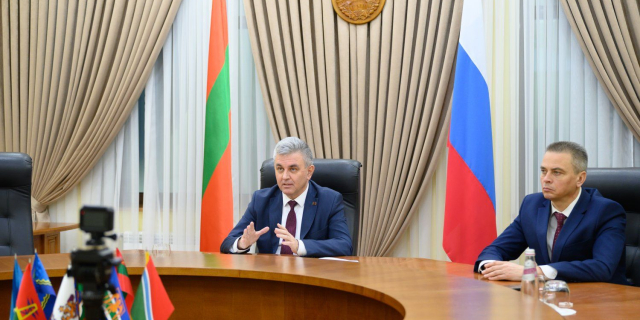
Introductory speech of the Presidential Address to Government Agencies by Vadim Krasnoselsky (transcript)
29 Jan, 2026, 12:27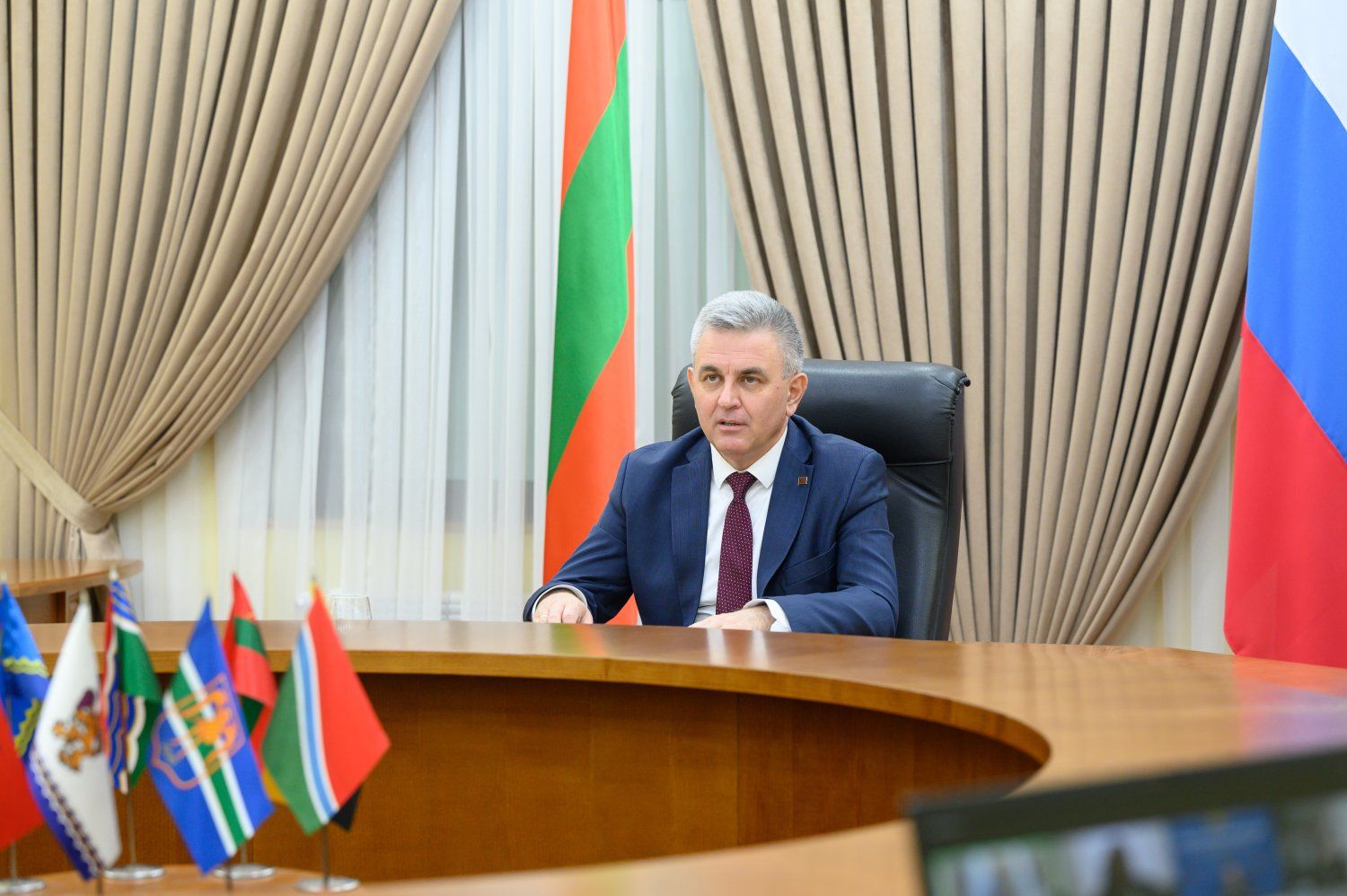
Фото: пресс-служба Президента ПМР
I as President set a task for our government bodies today, as is traditional at the beginning of the year: legislative, executive, and judicial. There will be many tasks, and, naturally, each official will receive their own task for their ministry, agency, and so on to implement. Advice: listen carefully to the President's entire address. Why? Because many tasks overlap. Perhaps a task assigned to another ministry or agency will indirectly affect your ministry or agency. So listen carefully and evaluate. The agenda is considerable, but necessary. Here's what's on the agenda. First, the Address of the President of the Pridnestrovian Moldavian Republic to government bodies. Next, the results of the Year of the Pridnestrovian People for 2025. Speaker: Maria Andreevna Kyrmyz. Later Maria Andreevna Kyrmyz will also present the action plan for the Year of the Pridnestrovian People for the current year, 2026.
I would like to remind you that all planning is based on the Development Strategy of the Pridnestrovian Moldavian Republic, which was approved by presidential decree and covers eight years 2019–2026. I remember there were many opinions, even criticism. What about eight years? The state will not cease to exist in eight years, and the Pridnestrovian people will not disappear. Not in eight years, nor in any other timeframe. This plan is already in its eighth year this year. It will soon reach its end. Naturally, we will continue to consider the development strategy for our statehood for the next period, which will be designated. Today's objectives will form the basis of the new Development Strategy of the Pridnestrovian Moldavian Republic. Naturally, we'll be working with the public, citizens, ministries, and agencies throughout the year. Taking into account all factors, both external and internal, we'll continue to plan the life of the state for a specific period. There's no way without plans. The President and every official, regardless of rank, must have a plan. This is planning. This is the algorithm for our actions. Of course, there are many factors that influence it, factors that might not be taken into account. The most important thing is the framework, the ultimate plan. We'll sort it out by and large then.
I'd like to highlight some of the factors that developed in the past year – 2025. It was a difficult year. Any year is difficult. But we're talking about 2025. Pridnestrovie continued to live in the current complex geopolitical situation. Military action is ongoing in a neighboring state. This is alarming. And, of course, Pridnestrovie traditionally supports peaceful resolution to any conflict, no matter where it may be. That's the first thing. Moreover, we faced an unprecedented energy and gas crisis at the beginning of the year. Understandably, our economy suffered, if not a devastating, then a serious blow. This affected legal entities, large and small businesses, and individuals, by and large. We survived this, too. We continue to live.
What else would I like to note? As I already said, any problems must be resolved at the negotiating table. Unfortunately, this so-called negotiating table is currently absent as such. The "5+2" format—a recognized negotiating platform ceased to function back in 2019. In the fall of 2019, when Moldova blocked the signing of the final document in Bratislava, it essentially withdrew from this format. I would like to remind you that Igor Nikolaevich Dodon was President of the Republic of Moldova at the time. These events largely occurred at his instigation. Then came the pandemic, and the parties have not returned to the negotiating process. For completely far-fetched reasons, for subjective reasons. The pandemic didn't interfere with the negotiation process. There are different formats. Even schools everywhere were working remotely. Why couldn't the "5+2" format work remotely? They simply didn't want to. They didn't want to see Pridnestrovie as a party to the negotiation process. That's a fact. Then, of course, came the near-catastrophic geopolitical events known as the military actions in Ukraine. Of course, this is a new factor in the history of Eastern Europe. And, of course, it influences the resumption of the "5+2" format. It influences, but doesn't preclude it – this is very important. If the parties so desire, the "5+2" format should work. I will touch on this a little more when I set tasks for the Ministry of Foreign Affairs. Nevertheless, we all managed to preserve the most important thing in these difficult circumstances – peace on Pridnestrovian soil. This is the most important thing. Therefore, I sincerely want to thank the Russian Federation as the core of the peacekeeping mission on the Dniester, the peacekeepers of Pridnestrovie, and the peacekeepers of Moldova. This is a tripartite mission aimed at maintaining security and peace and preventing casualties here in Pridnestrovie. Peace is truly a significant achievement.
Furthermore. We continued to make all social payments in difficult circumstances: salaries, pensions, and benefits. Key benefits were not cancelled. The exchange rate remained stable. Support measures for domestic producers were continued and proposed. 2025 was the Year of the Pridnestrovian People. This is a separate topic. Much can be said about the Pridnestrovian people, but not much will be said. They are an established community – the Pridnestrovian people, a multinational Pridnestrovian people, which, in fact, dates back approximately 300 years in modern history. They are a people made up of people of various nationalities and ethnicities. 72 nationalities and ethnicities live with respect for their history, their languages, their cultures, their traditions, and their religions. There is no hostility, no nationalism in Pridnestrovie, there never has been, and there never will be. We treat people with respect, regardless of skin color, language, faith, or views. This is our Pridnestrovian position, the position of the entire Pridnestrovian people. They exist. They must be taken into consideration. The Pridnestrovian people must be considered in any negotiating forum. Only the people determine the future of Pridnestrovie.
We celebrated the 80th anniversary of the Soviet people's victory in the Great Patriotic War last year. An important date. We held the "Immortal Regiment". You all witnessed and participated in it. We held a military parade. This year, we also celebrated an important date – the 35th anniversary of our statehood, the statehood of the Pridnestrovian Moldavian Republic. We continued to live and build. Despite budget problems, the Capital Investment Fund continued to function and will continue to function. Furthermore, we held elections to legislative and representative bodies of state power last year. Overall, I would like to assess the work of the entire state apparatus in 2025 as satisfactory.
We have entered 2026. As I've already said, the fundamental principles of development of Pridnestrovie are laid out in the Development Strategy of the Pridnestrovian Moldavian Republic, which include political stability, economic self-sufficiency, and social justice. These are the principles of Pridnestrovian development. Everything is very clear and simple. Furthermore, our state idea has been formulated. It is also clear and understandable, consisting of three points:
1. Strengthening the independence of Pridnestrovie with a focus on gaining international recognition and implementing the results of the 2006 referendum.
2. Continuing the formation of a community of "Pridnestrovian people," incorporating representatives of various nationalities and ethnic groups and based on the preservation and development of languages, cultures, customs, and traditions.
3. Building a socially oriented state with a market economy.
They ask: what do we have? Capitalism? It's not quite capitalism, given the definition of the term. Socialism? Not quite. In general, I am convinced that the states that were formerly part of the Russian Empire and the Soviet Union each had their own development path. This path of building a socially oriented state with a market economy is, in my view, the most correct and appropriate.
As I already said, what we will discuss today will form the basis for new development planning for our state. Today's message to government bodies and administrative bodies is based on appeals from citizens, public organizations, and the work of the Supreme Council, the Government, and the President, by and large. This is correct. We absolutely must not lose touch with the people and their problems. But more on that later. I will also touch on the work of each official in Pridnestrovie. The entire message is divided into three main parts: political stability, economic self-sufficiency, and social justice.