Society
Presidential Address, "Social Justice", Tasks for the PMR Ministry of Education PSU (transcript)
30 Jan, 2026, 10:16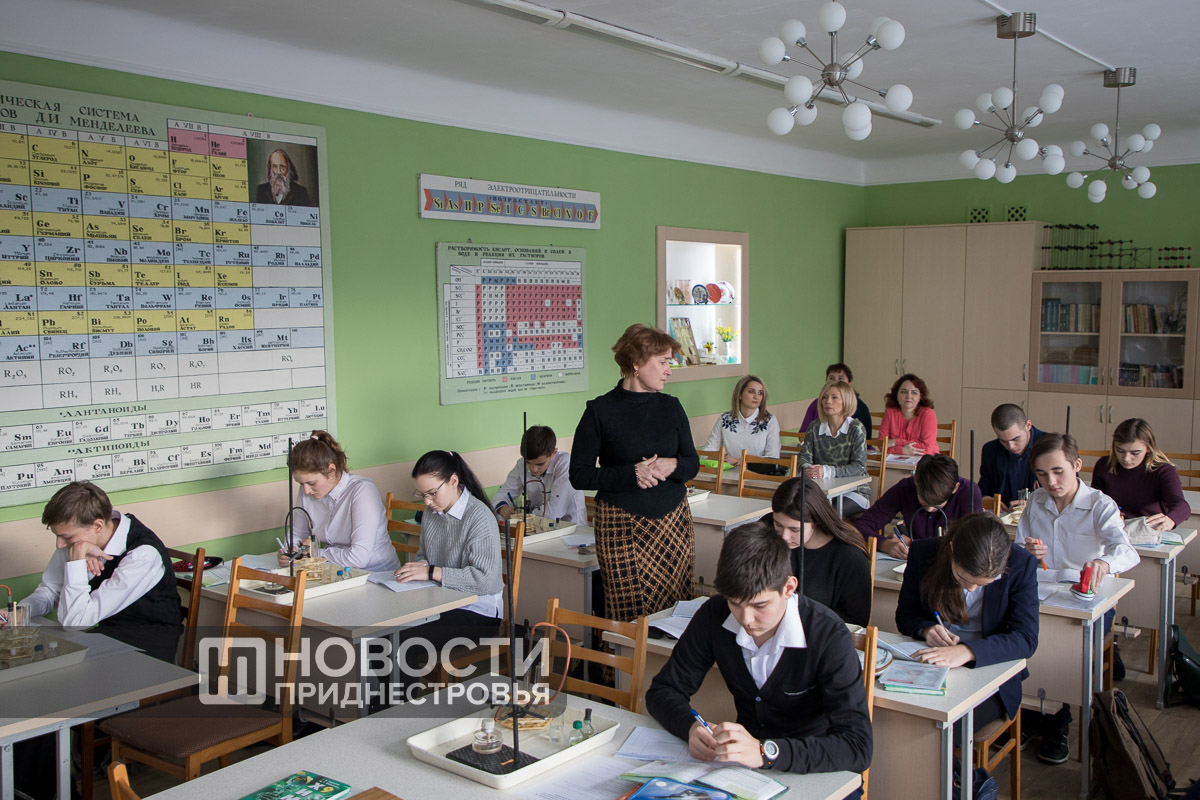
Фото из архива ИА «Новости Приднестровья»
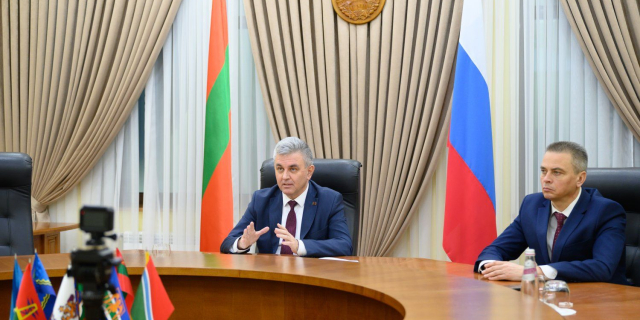
We'll devote a little more time to education.
To the PMR Ministry of Education
First of all, continue work on improving the system of independent assessment of education quality and expanding the use of digital educational and management tools in preschool, general, and special (correctional) education. Svetlana Nikolaevna Ivanishina, we certainly need to make a decision. There's an "Electronic Journal". Some schools only have an "Electronic Journal," but no diary. Some schools have both a diary and an "Electronic Journal." You decide. There must be uniformity. Or break it down by age group. It should be the same everywhere. There shouldn't be any questions for the President about why things are like this in this school and like that in that school. That shouldn't be the case. It's either this way or that. Do what's best. I don't interfere in these processes, by and large.
Create conditions for students' professional self-determination within the vocational education system, their successful placement and employment. Of course, the foundations for dual education and more.
Take measures to engage young people in social, volunteer, and community initiatives.
Enhance the professional competencies of teaching staff at all levels of the education system. Develop professional interactions and exchange of experience, including international cooperation. This is understandable.
Now I want to provide guidance on addressing certain staffing issues. It's clear that the current salary level, to be honest and objective, doesn't meet needs. That's putting it mildly. If there were a source for it, they would immediately increase it. We will definitely do this at the slightest opportunity. I want to propose an approach to solving the staffing problem. This applies to schools and all other educational institutions. A preliminary approach has already been developed, and I see no problems with its implementation; all that's needed is the desire to do so. I'll give you an example; it will help you understand how this problem will be solved. At one time, our healthcare system had a significant shortage of mid-level specialists – specifically, nurses. There weren't enough of them. What did we do? We legislated to give all third-year medical students the right to work in medical institutions in their specialty: nurses. Today, many students are taking advantage of this opportunity: they study and work shifts. This brings in some income in principle and builds their practical experience, of course. This is very important. Otherwise, it turns out: someone graduates from medical school, but their hand shakes, and they can't even put on an IV. We're combining the two: we've replenished our staff, we're building practical experience, and we're getting paid. It's fine. As for the Ministry of Education, we have problems with physics, chemistry, and mathematics teachers. Subject specialists, in short. There is a problem. What I propose, starting September 1st, is to create employment opportunities for all students studying pedagogy in various specializations at Pridnestrovian State University and elsewhere (but based at PSU). You receive an intermediate diploma of incomplete higher education, which allows you to teach in schools, with a transfer to distance learning after the third year. We'll also introduce a number of bonuses. The first bonus: if you previously studied on a fee-paying basis, then upon employment at a school and distance learning, you'll be transferred to free education. The second bonus is also important. After studying on a state-funded basis, we provide a three-year work experience in the education system. So, this work experience will begin the moment you start working in a school. So, the fourth and fifth years, working in a school, are already a work experience. One more year - and that's it. Go ahead, you'll get a foothold, like it, and so on. I'll tell you, dear colleagues: if anyone doubts and thinks that you can't teach after the third year, you're mistaken. You can't teach physics to a physical education teacher, you understand? That's just not allowed. It happens all the time here. But it's possible to saturate schools with qualified personnel this way. Therefore, the Ministry of Education, along with all other interested institutions, including PSU, regarding the government's initiative and its consideration by the Supreme Council (according to their respective jurisdictions), must develop all these mechanisms and transition to this system starting September 1st. Provide the opportunity. Propose it. No one will push anyone. This will be a right, but with certain benefits. The same applies to the State Sports Service. After the third year of physical education, a young person can come and work as a coach-organizer under the same conditions. I'll come back to this later.
We must complete the accreditation of our secondary educational institutions in the Russian Federation this year. This means that upon completing school, our children will receive both a Pridnestrovian and a Russian certificate. This is an important step toward improving the quality of our secondary education.
We must directly participate in promoting the Pridnestrovian community through thematic discussions, lectures, courses, and so on. This applies to both teachers and students, regardless of age. You have all received curricula on the history of Pridnestrovie, collections of historical essays, and the history of the Pridnestrovian community in general. Use them and supplement your lectures. This is very important. Furthermore, the Ministry of Education, in conjunction with city and district administrations and PSU, must develop guidelines for our children's visits to museums, relevant cultural heritage sites, and memorials, including organized excursions. PSU offers a wide range of museum activities at a very high level. All of this should be seen and learned. All of this truly shapes the "Pridnestrovian people" community. It creates an understanding of our significance on this land. That's what you should do.
Now let's move on to that word I don't like: "bullying". Together with the Ministry of Internal Affairs. I spoke at a pedagogical forum and outlined all the areas, tasks, and, most importantly, how to solve it last year, in August. Of course, you can't force young people into some virtual box, restrict their movement, or confiscate their mobile phones. This should never be done. You just need to be able to understand the individual problems that can be quickly resolved, and the system. The system definitely needs to be corrected. The system of assault, the system of insults, the system of violence in schools, and the system of, let's say, inappropriate behavior toward teachers. I've heard different opinions from people who perhaps don't quite understand what they're talking about or how to combat this. There's a distraction, with the idea that all these are supposedly social phenomena, that it all comes from society, and that it's impossible to combat it. This isn't true. High-ranking generals once told me that it was impossible to combat hazing in the armed forces, in the Ministry of Internal Affairs, that it was also a social phenomenon. No, it's not true. This is the fault of commanders, superiors, and ministers to some extent. Today, as I already said, both in the Ministry of Internal Affairs, where conscript service exists, and in the Ministry of Defense, this negative factor is absent. We have practically reduced all physical abuse and hazing to zero – this vile phenomenon discredits the army. So what? Has our society changed somehow? Nothing has happened. They simply tightened controls, built a system to counter this evil. It no longer exists. The military prosecutor was left without a job. The man sits there and suffers. Let him also give lectures on legal awareness in the troops. The point is different. Here's a school. What are we seeing? Certain violence, and sometimes the uncontrollability of some students, who are simply impossible to influence. Here's another criticism of parents: parents are protective. Of course, that's normal. Who should parents protect? Parents will always protect their children. You can be angry about this, but it will always be like this. We shouldn't be distracted by this. We need to build a system of monitoring and preventing school violence. There are certain "red lines" one of which is "the teacher is always right". I admit the difficulties of relationships, but at the same time, there are respected teachers who can mediate conflicts. Perhaps even later, somewhere one-on-one, you can say to the teacher: "Well, Ivan Ivanovich, you're wrong, you're going too far". There's a good saying: if you go too far, it will turn into a boomerang. Do you understand? It will hit you. Don't go too far. There are principals, head teachers (there are actually many of them), those who should resolve conflicts. Please, do this. So that it doesn't turn out like last year at one school, when there were five head teachers, a head teacher and nothing. Do you understand? Nothing. Self-elimination from problems. We see nothing, we hear nothing, we're afraid of everyone. It's good it didn't end in tragedy. I as President, have had to intervene in these processes. How is this possible? It's wrong. The Ministry of Internal Affairs, together with the leadership of the Ministry of Education, needs to assess whether this is a one-off violation (and then immediately put the person in their place) or a systemic one. So, if it's systemic, be able to document it. Otherwise, it turns out like this: when there's a conflict, some materials are compiled and taken to court, and they look at the offender's diary, where he has "exemplary behavior" throughout. He's brought to court with his parents then. They say, "No, sorry, goodbye". They're doing the right thing. Create a systemic approach, so that it's recorded in the diary, in the "Electronic Journal," so that parents are summoned, conversations are held, and the teenager's behavior is documented.
This is your task – the Ministry of Education and all other agencies: the Juvenile Affairs Commission, the Juvenile Affairs Inspectorate, and so on. The Ministry of Education and the Ministry of Internal Affairs will continue to launch and implement the Anti-Bullying System in the education system, ensuring its full integration into institutional practices. This will ensure that teachers and students can safely communicate with relevant Ministry of Internal Affairs officials without fear of retaliation from certain elements.
To the Ministry of Education and the Ministry of Internal Affairs: continue and strengthen joint efforts to prevent bullying in educational institutions, including holding regular lectures, educational events, and systematically working with parents, children, and the teaching community. Deepen interagency cooperation aimed at prevention, early detection, and prompt response in the event of bullying.
One more important element. We have a very good educational institution – the School named after Makarenko. I have already given instructions. Vitaly Nikolaevich Neagu, please join us in our work on legislative changes. Currently, the School named after Makarenko permanently accommodates children under 14, as determined by the court – those who have committed a crime but have not yet reached the age of criminal responsibility. No one bullies them; everything is fine there. They are well-integrated into society. The Ministry of Internal Affairs, through its own lives, demonstrates how to behave in society, how not to break the rules. Be human, be with us. The law needs to expand the scope of this institution: from 14 to 18 years old. Both full-time and full-time placements are possible, depending on the conditions. I think daytime placement is preferable. What's the problem? According to current legislation, a minor, even if they violate the rules, set fire to the school, or otherwise commit other acts, cannot be transferred to another educational institution without parental consent. That's the law. Some people take advantage of it. Try to translate it – you'll sue him, and he'll come and slap this term on everyone, from the principal to his classmates. This is what needs to be addressed. Makarenko's school is a wonderful institution, where these people, incapable of self-correction, will attend 10th and 11th grades, as determined by the court. This will be a good disciplinary and deterrent factor for both them and their parents.
We need to review all of this legislation and urgently introduce changes to protect against school violence. Moreover, the court will determine the timeframe: six months, a year, or two – as we propose. This is the right thing to do. The mechanism exists; we just need to activate it.
Pridnestrovian State University
Complete the accreditation process for educational activities at all levels of training.
Organize and hold an investment project competition among students.
Develop the interactive educational environment "PSU Electronic University".
Ensure interaction with the electronic libraries of leading educational and scientific organizations of the Russian Federation as part of the process of integration into the Russian education system.
Facilitate the development of a civic identity among students based on respect for the multinational composition of the Pridnestrovian people, their linguistic and cultural diversity.
Ensure the effective operation of the university museums – the archaeological, the history of PSU, the geological-paleontological, and the zoological – with mandatory excursions for both students and secondary school students (senior grades, starting from grade 8). Younger children may also be invited, at their discretion.
Ensure the effective operation of the IT-Quantum Digital Education Center. Ensure the broad involvement of students, schoolchildren, and other creative youth in its innovative activities.
Of course, continue implementing the Capital Investment Fund's plan for the renovation of Pridnestrovian State University facilities.